Dinner and Snacks
Published: February 2026
Understanding Evening Meal Patterns
Dinner typically represents the final major eating occasion of the day in many dietary patterns. The timing, size, and composition of evening meals vary considerably across cultures, lifestyles, and individual preferences.
This article explores common patterns in dinner structuring and strategic snacking from an educational perspective, without providing personalized recommendations.
Evening Meal Composition
Dinner meals often incorporate similar food categories as other major meals, though the specific compositions and portions may differ based on various factors including earlier food intake, evening activities, and cultural traditions.
Protein Sources
Evening meals frequently feature protein sources such as fish and seafood, poultry, lean meats, plant-based proteins like tofu, tempeh, or seitan, legumes and lentils, and eggs or dairy products.
The emphasis on protein in evening meals is discussed in various nutritional education contexts.
Vegetables
Dinner typically includes substantial vegetable portions. Common preparations include roasted or grilled vegetables, steamed greens, stir-fried vegetable mixtures, raw salads, and vegetable-based soups.
Many dietary education frameworks emphasize vegetable inclusion in evening meals.
Carbohydrate Sources
Complex carbohydrates in dinner contexts include brown rice or wild rice, quinoa or other ancient grains, sweet potatoes or other starchy vegetables, whole grain pasta, and legumes serving dual roles as protein and carbohydrate sources.
The type and quantity of carbohydrates in evening meals vary across different dietary approaches.
Healthy Fats
Fats in dinner preparations include olive oil or avocado oil for cooking, nuts and seeds as garnishes, avocado slices, olives, and fatty fish providing omega-3 fatty acids.
Examples of Structured Dinner Compositions
The following examples illustrate common dinner patterns observed globally. These are provided for educational purposes only:
Traditional Plated Dinner
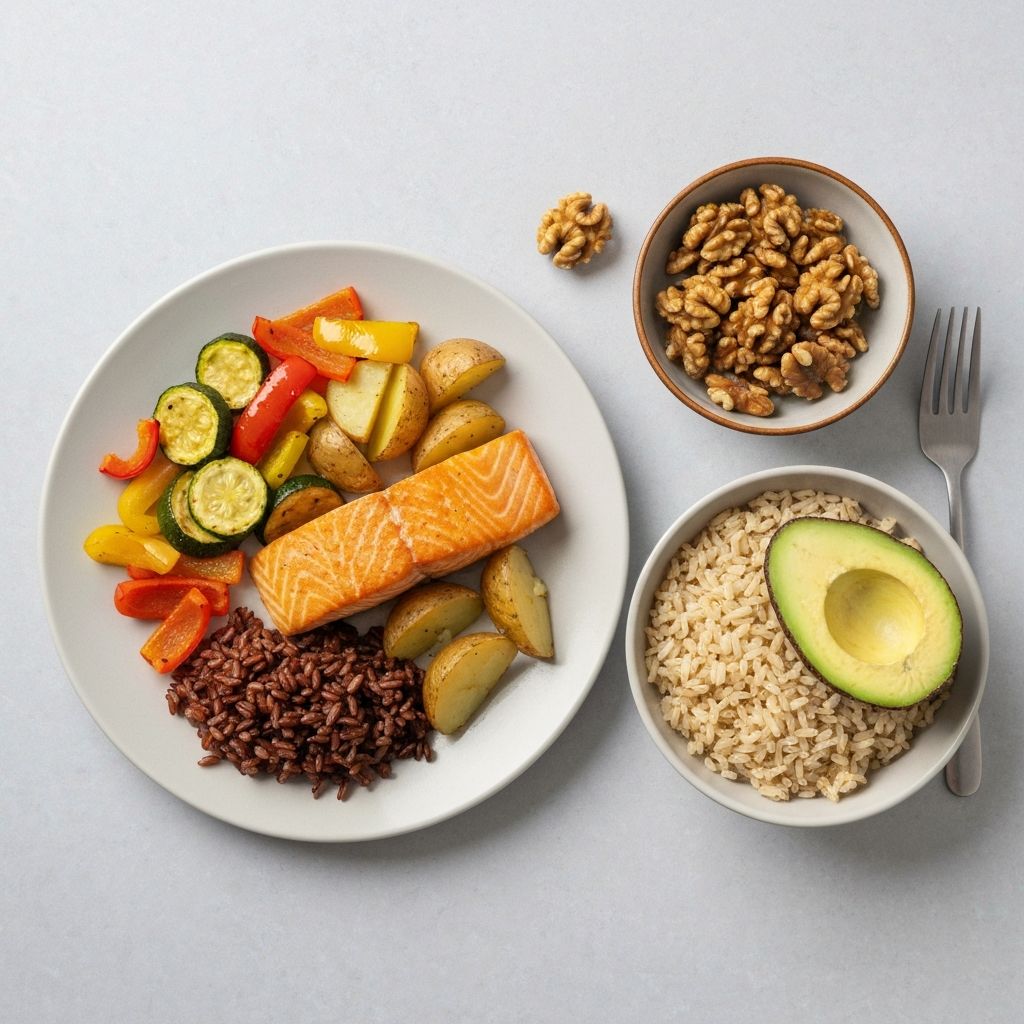
Baked salmon with lemon and herbs, roasted Brussels sprouts and carrots, quinoa pilaf, and side salad with olive oil dressing. This pattern demonstrates distinct food categories on a single plate.
One-Pot Meal Pattern
Vegetable and chickpea curry with tomato base, served over brown rice, garnished with cilantro and cashews. This pattern combines multiple food groups in a unified dish.
Bowl-Based Dinner
Base of mixed greens and grain, topped with grilled chicken or tofu, roasted sweet potato, steamed broccoli, avocado, and tahini dressing. This follows the bowl composition approach discussed in meal structuring education.
Mediterranean-Style Pattern
Grilled fish or chicken, Greek salad with tomatoes, cucumber, olives, and feta, whole grain pita, hummus, and roasted eggplant. This reflects dietary patterns observed in Mediterranean regions.
Dinner Timing Considerations
The timing of dinner consumption varies significantly. Some individuals eat their evening meal relatively early, while others dine later in the evening.
Factors influencing dinner timing include work schedules, family routines, cultural norms, and personal preferences. Different timing patterns are observed across populations.
This website does not advocate for specific dinner timing, as individual circumstances vary considerably.
Understanding Snacking Patterns
Snacks refer to smaller eating occasions between major meals. Snacking patterns vary widely among individuals, with some people incorporating regular snacks and others eating only during main meals.
Common Snacking Occasions
Typical snacking times include mid-morning between breakfast and lunch, mid-afternoon between lunch and dinner, and evening after dinner. The frequency and timing of snacks vary based on individual eating patterns.
Snack Composition Concepts
Nutritional education literature often discusses balanced snack composition, suggesting combinations that include protein, healthy fats, and fiber sources rather than isolated simple carbohydrates.
This is an educational concept, not a prescriptive rule for individual snacking.
Examples of Structured Snack Options
The following examples illustrate snack patterns discussed in nutritional education contexts:
Protein and Fruit Combination
Greek yogurt with berries, or apple slices with almond butter. These combinations pair protein or healthy fats with fruit.
Vegetable-Based Snacks
Carrot and celery sticks with hummus, or cucumber slices with guacamole. These emphasize vegetable consumption between meals.
Nut and Seed Options
Small portions of mixed nuts, or homemade trail mix with nuts, seeds, and dried fruit. These provide protein, healthy fats, and some carbohydrates.
Whole Grain Snacks
Whole grain crackers with cheese, or oatcakes with nut butter. These combine complex carbohydrates with protein or fats.
Mindful Eating Concepts
Mindful eating is a concept discussed in nutritional and behavioral education literature. It refers to awareness of physical hunger and satiety signals, attention to food choices and eating occasions, and recognition of emotional versus physical hunger.
These concepts are explored in educational contexts regarding eating behaviors and patterns.
Evening Eating and Sleep
The relationship between evening food intake and sleep quality is a topic discussed in nutritional and sleep research literature. Various factors including meal size, timing, and composition are studied in this context.
Individual responses to evening eating patterns vary considerably, and this content does not provide specific guidance on evening meal timing.
Educational Context
Information Only: This article provides educational information about dinner and snacking patterns and does not offer personalized dietary advice or meal plans.
Individual Variation: Optimal meal and snack timing, frequency, and composition vary significantly among individuals based on lifestyle, preferences, and circumstances.
Professional Guidance: For personalized nutrition planning or specific dietary concerns, consult with qualified nutrition or healthcare professionals.
No Guarantees: This content does not promise or guarantee any specific health outcomes from particular eating patterns or food choices.
Summary
Dinner and snacking patterns represent important components of daily eating occasions. Understanding common approaches to evening meals and between-meal eating can contribute to nutritional awareness.
This educational content describes general concepts and patterns without prescribing specific approaches for individuals. Personal dietary patterns should be developed based on individual circumstances and, when needed, professional guidance.
Explore Further
Continue learning about meal structuring with our other educational resources.